
Creating a Cosy Vintage Parlour on a Budget
Why the Parlour Deserves a Comeback
The front room kept for best is an old idea, and a good one. A parlour does not need to be a museum piece or a whole room, either — a corner of a flat, the end of a sitting room, or a dining table pushed against the wall will do. What matters is that it has been arranged with intent: somewhere a guest is greeted, seated, given a cup of tea and made to feel that the visit was worth marking.
The good news is that this sort of room is built from other people's cast-offs. The best parlours have always been a mix of inherited things and happy finds, and none of it need cost much. What follows is practical, and it assumes a budget rather than a windfall.
Begin With What You Already Have
Before you spend a penny, take stock of the things you could never buy — the jug with the chipped spout, the sideboard that came down through the family, the box of photographs nobody has framed. These are the pieces that give a room its voice.
Group them rather than scatter them. One good inherited piece with two or three supporting objects will always look better than the same items spread around the room. Give the sideboard its own wall. Hang the photographs in a cluster, not in marching order along the picture rail.
Resist painting dark wood too quickly. A tin of beeswax and half an hour with a rag will bring up mahogany or oak far better than chalk paint, and it costs about three pounds. If a chair wobbles, tighten the joints and glue them before you decide the piece is beyond saving. Loose veneer can be eased flat with a warm iron over a cloth, though if in doubt, leave it be.
Charity Shop Rules Worth Following
Charity shops reward patience and a bit of nerve. A few habits will save you both money and disappointment.
- Go on weekday mornings. Weekend donations are sorted by Monday or Tuesday, so that is when the good china and the better linen appear. Ask politely whether there is anything in the back that has not reached the shelves.
- Carry a set amount. A tenner and some change keeps you honest and stops you buying a fourth tea set you do not need.
- Learn a few marks. Dovetail joints on a drawer, a backstamp that says England or a recognisable maker, brass with real weight to it, wool blankets that feel substantial rather than limp. These are the quiet signals of quality.
- Buy in threes and fives where you can. Odd numbers of plates or glasses look collected rather than incomplete.
- Sniff everything. Damp, smoke and mothballs are almost impossible to shift, and no bargain is worth a room that smells of a locked cupboard.
Beyond the high street, look at car boot sales in the early hours, church hall jumble sales, house clearance auctions that sell by the box, and local noticeboards. Box lots are where mismatched china and cutlery are cheapest of all.
Layering: The Real Secret of Cosiness
A parlour feels warm because it is layered, not because it is full. Work in three directions: underfoot, on the walls, and overhead.
Underfoot, a small rug over a carpet, or a rug over a rug, does more for warmth than any amount of paint. Wool blankets and tartan throws folded over chair backs add colour and can be pulled over a lap without ceremony. Cushions should be mismatched — two plain, one patterned, one with a bit of embroidery — and they should be comfortable enough to actually use.
Lighting matters more than anything else in the room. Aim for three separate pools of light and avoid the single ceiling bulb. A standard lamp with a fabric shade, a small table lamp beside the best chair, and a lamp on the sideboard will transform a space for perhaps fifteen pounds if you buy carefully second-hand. Use warm bulbs, and put a doily or a small tray underneath to protect the wood.
On the walls, hang plates, watercolours and old prints in mismatched frames — but keep to two frame finishes, say gilt and dark wood, so the effect reads as considered rather than chaotic. Leave roughly a third of every surface empty. Breathing space is what separates a parlour from a junk shop.
Setting the Table for Afternoon Tea
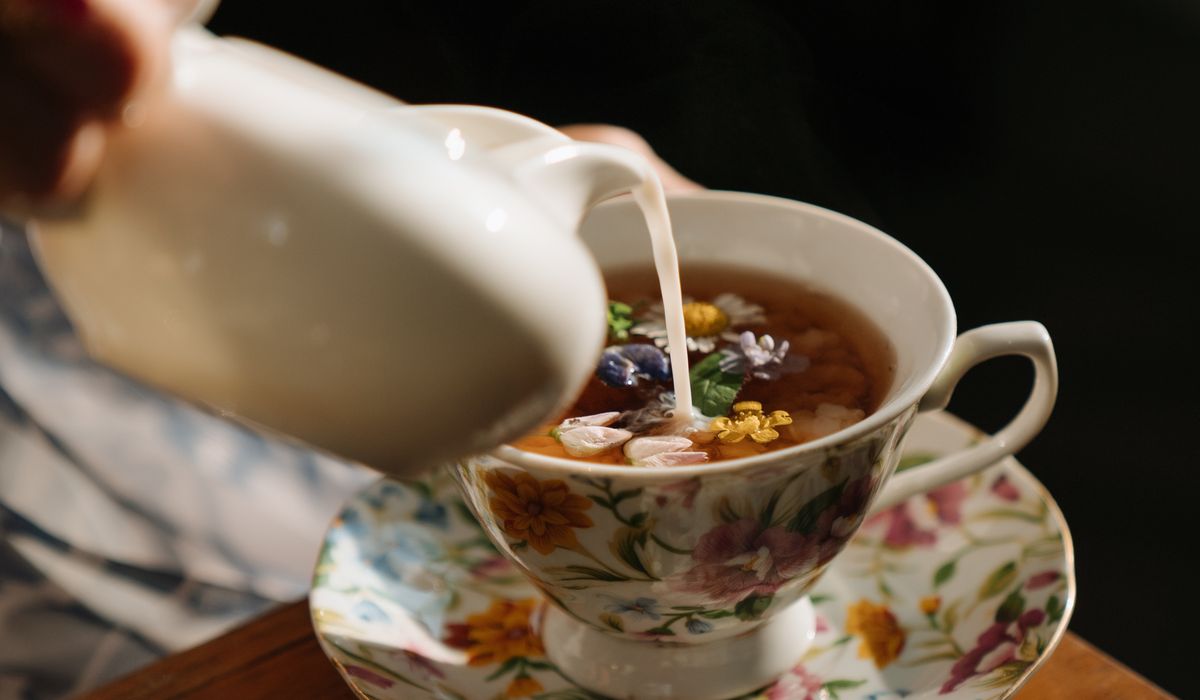
Afternoon tea is the ritual that turns a room into a parlour. It does not require a matching service; mismatched china is the entire point, and a table of borrowed patterns looks far more generous than one that came from a single box.
- Three tiers, in order. Sandwiches on the bottom, scones in the middle, cakes on top. Cut the crusts off, butter the bread before filling, and keep fillings simple — cucumber, smoked salmon, egg and cress, ham and mustard.
- Scones split, never cut through. Use jam and clotted cream in whichever order your family has always insisted upon, and be prepared to defend it.
- Tea from a pot. Loose leaf if you can, with a strainer and a cosy over the pot. Warm the pot first with a splash of boiling water. Milk in the cup before the tea, sugar in a bowl with tongs.
- Small touches. Fabric napkins rather than paper, a jug of milk, lemon slices on a saucer, and a few stems from the garden in a small vase.
Little Rituals That Make It a Parlour
Rooms become parlours through habit rather than furniture. Keep a tray set with cups, a tin of biscuits and a folded cloth, ready to carry through. Put on the radio or a record rather than the television. Keep a pack of cards, a crossword and a couple of good hardback books within reach of the best chair.
Polish the brass on a Sunday, air the room in the morning, and put a cushion behind your guest's back. Greet people at the door, take their coats and sit them down before you put the kettle on. Do those small things often enough and the room will do the rest, however little you spent on it.
tag: Vintage Decor

Oliver Bexley Author
Blend dark wood and worn upholstery with clean lines and soft lighting so old pieces feel intentional rather than dusty or out of place.
YOU MAY ALSO LIKE

How to Style Antique Furniture in Modern Homes
Sep 9
10Discover how traditional patterns can add warmth and character, plus practical tips for choosing scales that suit small or large spaces.
read more
The Charm of Floral Wallpaper in a Sitting Room
Sep 4
10Gather friends for charades, sardines and twenty questions, simple amusements that need no screens and suit all ages.
read moreAfternoon Tea
-

ERRIC CATONA
Set the scene with candlelight, period music and traditional card games for an evening that feels playful, elegant and delightfully old-fashioned.
May 19, 2016 at 5.12 pm
Reply
ERRIC CATONA
Introduce young players to blind man's buff, hunt the thimble and other gentle games that build confidence, memory and social skills.
May 19, 2016 at 5.12 pm
Reply -
ERRIC CATONA
Plan a comforting menu, set a generous table and pace the courses so you can enjoy your guests instead of rushing in the kitchen.
May 19, 2016 at 5.12 pm
Reply
Vintage Decor
Your email address will not be published.