
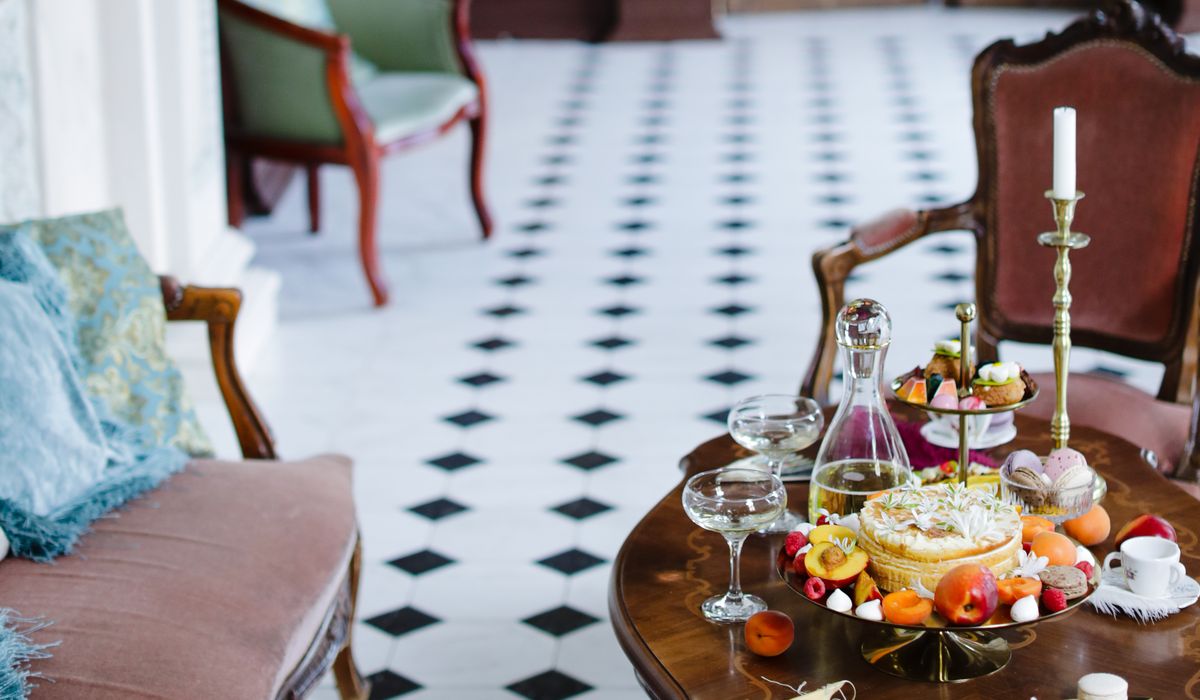
How to Lay a Traditional Afternoon Tea Table
Start with the Table Itself
Afternoon tea is not a meal so much as a small ceremony, and the table is its stage. Before you think about cake or china, give yourself a clear hour at a table that will comfortably seat everyone without elbows touching. A round or oval table is friendliest here, because nobody ends up stranded at a corner, but a rectangle works beautifully if you keep the centrepiece low. Aim for roughly 70cm of table edge per person for teacups, saucer, plate, and napkin.
Iron your tablecloth properly, or at least give it a brisk press where it folds. A white or cream linen cloth reads as classic, but a soft damask in pale blue or faded rose feels warmer and less formal. If you are using a patterned cloth, keep the china plain; if the china is patterned, keep the cloth quiet. One of the two should do the talking.
Position the teapot, hot water jug and milk jug at one end, within your own reach rather than a guest's. You will be pouring, and it is far easier to lean than to ask someone to pass a full pot across a tiered stand.
Building the Tiered Stand
The three-tier stand is the heart of the table, and the traditional order is not arbitrary — it guides the guest from savoury to sweet without anyone having to think about it.
- Bottom tier: finger sandwiches, cut neat and arranged in a ring with the fillings alternating.
- Middle tier: scones, wrapped in a napkin to keep them warm, with small dishes of clotted cream and jam alongside.
- Top tier: the petits fours, small cakes, tartlets and perhaps a slice or two of fruit cake.
Place the stand slightly off-centre rather than dead centre, so guests can see each other across the table. Don't overfill it. A stand that looks generous but not groaning is more inviting, and it gives you room to replenish halfway through, which always pleases.
China, Cutlery and Glassware
Use your best china, but use a mixed set if that is what you have. Mismatched teacups in the same family of colours — all florals, or all pastel banding — look deliberate and charming rather than careless. Teacups should be on saucers with a teaspoon resting on the saucer behind the cup, never inside it, so the handle stays clean.
Lay a small side plate at each setting, roughly 20cm across, positioned about 3cm from the table edge. To its left, a tea knife if you are serving fruit cake or anything that needs cutting; to the right, nothing else is usually necessary. If you are offering a glass of something chilled, a small tumbler or coupe sits above and to the right of the plate.
Warm the teapot first with a splash of boiling water, swirl it, and tip it away. This one small habit makes a noticeable difference to how long the tea stays hot. Loose leaf in a strainer gives the best cup, but good quality bags in a pot are perfectly respectable — use one bag per person plus one for the pot, and never let it stew for more than four minutes.
Linen, Napkins and the Finishing Touches
Cloth napkins, folded simply, laid either on the side plate or to the left of the fork line. A flat fold is fine; a fan looks lovely but collapses the moment it is used. If you have napkin rings, use them — they hold the fold, and they give each setting a satisfying sense of ownership.
Bring in a small vase of garden flowers, kept under 20cm tall so nobody has to peer around it. A few sprigs of rosemary, a handful of sweet peas or three stems of dried lavender in a little jug will do more for the atmosphere than anything elaborate. Light a candle only if the afternoon is drawing in; afternoon tea is a daylight pleasure and looks best in natural light.
Keep a spare teapot or a thermal jug of hot water on a side table, along with extra milk, lemon slices in a small dish, and a bowl of sugar cubes with tongs. Guests should never have to ask twice, and you should never have to leave the table mid-conversation.
Keeping It Relaxed
The great secret of a good afternoon tea is that it should look as though it happened effortlessly, even when it did not. Resist the urge to fill every square inch. Leave a little breathing room on the table, serve the sandwiches at room temperature rather than fridge-cold, and put the scones out only once people are seated so they are still warm when they reach for them.
Let guests help themselves to the stand, but do the pouring yourself for the first round. After that, pass the pot and let the table take over. If someone wants jam on a sandwich, or takes their tea weak and milky, say nothing and hand them the jug.
Finally, do not clear plates the moment they are empty. Afternoon tea is meant to be lingered over, and a table that still holds a few crumbs and half a pot of tea is a table where people are comfortable. That is the whole point.
tag: Afternoon Tea

James Ashworth Author
From brisk English breakfast to fragrant Earl Grey, learn which loose-leaf blends suit sandwiches, scones and sweet pastries without overwhelming the palate.
YOU MAY ALSO LIKE

Choosing the Best Teas for a British Afternoon Tea
Sep 22
10Master the order of courses, how to hold a cup and the polite way to pass plates during a traditional afternoon tea at home.
read more
A Simple Guide to Afternoon Tea Etiquette
Sep 17
10Mix charity-shop finds with inherited pieces to build a warm, layered room that reflects your personality without spending a fortune.
read moreAfternoon Tea
-

ERRIC CATONA
Blend dark wood and worn upholstery with clean lines and soft lighting so old pieces feel intentional rather than dusty or out of place.
May 19, 2016 at 5.12 pm
Reply
ERRIC CATONA
Discover how traditional patterns can add warmth and character, plus practical tips for choosing scales that suit small or large spaces.
May 19, 2016 at 5.12 pm
Reply -
ERRIC CATONA
Gather friends for charades, sardines and twenty questions, simple amusements that need no screens and suit all ages.
May 19, 2016 at 5.12 pm
Reply
Vintage Decor
Your email address will not be published.