
Setting a Spring Table with Garden Flowers
Why Spring Blooms Belong on the Table
There is a particular pleasure in carrying a handful of daffodils in from the garden and setting them in the middle of the table. It is a distinctly British ritual, one that predates the florist's shop and, in many homes, outlasts it. Spring flowers are generous in a way hothouse arrangements are not: they arrive in abundance, they cost nothing but the walk to the border, and they look best slightly unruly rather than perfectly placed.
If you are laying a table for afternoon tea, or simply for Sunday lunch with the family, a modest centrepiece of seasonal blooms and a few sprigs of herb will do more for the room than anything bought in cellophane. The art lies not in spending more but in choosing well, cutting cleanly and arranging with a light hand.
Choosing and Conditioning the Blooms
Pick in the cool of the morning, when stems are plump with water. Take a clean bucket out with you rather than a basket, and plunge the stems straight into it. Cut on a sharp slant with a clean knife or a pair of secateurs — a sloping cut gives the stem a larger surface to drink from — and strip away any leaves that would sit below the waterline, since these rot and sour the water within a day.
Daffodils deserve their own paragraph, and their own vase. Their stems release a milky sap that is harmful to other flowers, so condition them separately in cool water for at least four hours — overnight is better — before mixing them with tulips or foliage. If you do want them together, condition the daffodils first and rinse the stems thoroughly. Tulips, meanwhile, carry on growing in the vase and will lean towards the light, so a low arrangement will shift gently over a day or two. That is part of their charm.
A Simple Posy in a Vintage Vessel
You do not need a florist's equipment. A jelly mould, a milk jug, a pewter tankard or a lidded sugar bowl all make charming holders, provided they are waterproof. Line anything that leaks with a small glass or a jam jar.
- Choose an odd number of stems — five or seven reads more naturally than six.
- Start with the tallest bloom and set it slightly off-centre.
- Work around it, turning the vase as you go so it looks well from every seat.
- Keep the flowers about twice the height of the vessel, and no more.
- Add a sprig or two of foliage last, letting it trail just over the rim.
- Stand back and loosen anything that looks too tidy.
Keep the finished arrangement below eye level — around 20 to 25cm including the vase — so that guests can see one another across the table.
Herbs as an Unfussy Accent
A few sprigs of garden herb will lift a spring table without competing with the flowers. Rosemary and thyme have woody stems that hold their shape well, and their grey-green tones set off yellow daffodils beautifully. Mint in a small glass jug looks fresh and can be picked for the teapot. A single bay leaf tucked into a posy adds a little formality, and flowering chives, if you have them, are a talking point.
If you are serving afternoon tea, put the herb pot where guests can actually reach it. Mint and lemon balm are far better fresh than dried, and a small glass of mint on the table invites people to help themselves.
Laying the Table for Afternoon Tea
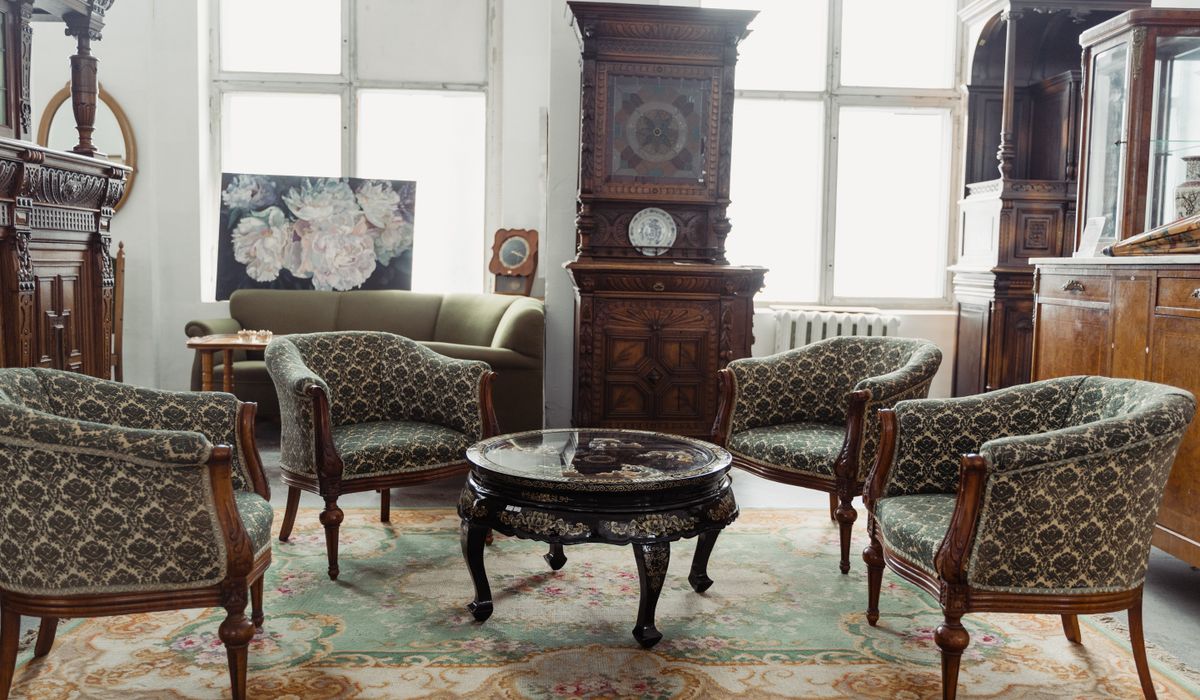
The vintage parlour look is forgiving: mismatched china, a linen cloth and a cake stand given pride of place. Flowers should be the supporting act rather than the star, so place your posy to one side of the cake stand rather than directly behind it, where it will fight the silhouette.
Small posies in teacups at each place setting are a lovely touch and use up the last few stems. Keep them very low, or choose unscented blooms — nobody wants a tulip in the way of their scone. A folded napkin and a small side plate complete the setting. For a long table, repeat the same small arrangement at two or three points rather than making one enormous centrepiece.
Keeping the Table Fresh Through the Week
Change the water daily, or at least every other day, and re-trim the stems by a centimetre each time. Keep arrangements out of direct sun and away from the fruit bowl: ripening fruit releases a gas that shortens the life of cut flowers considerably. Tulips that have gone limp can often be revived by wrapping them tightly in newspaper and standing them in deep, cool water for an hour.
With a little attention, a few stems from the garden will hold their own against anything a shop could offer — and they will smell of the season, which is the whole point.
tag: Seasonal Table

Oliver Bexley Author
Layer russet linens, beeswax candles and foraged foliage to create a generous table that feels cosy as evenings draw in.
YOU MAY ALSO LIKE

Autumn Table Settings with Warm Colours
Aug 3
10Keep decorations simple with greenery, red ribbons and plain china, then let good food and company take centre stage.
read more
A Festive Christmas Table Without the Fuss
Jul 30
10Follow a reliable recipe for light sponge, raspberry jam and whipped cream, the cornerstone of any British tea table.
read moreAfternoon Tea
-

ERRIC CATONA
Learn the secrets of cold butter, a light touch and a hot oven for scones with a crisp top and tender crumb.
May 19, 2016 at 5.12 pm
Reply
ERRIC CATONA
Match smoky lapsang with rich fruit cake, or bright Assam with lemon drizzle, to bring out the best in both.
May 19, 2016 at 5.12 pm
Reply -
ERRIC CATONA
Greet visitors warmly, take their coats and offer a drink promptly, small gestures that make people feel valued and comfortable.
May 19, 2016 at 5.12 pm
Reply
Vintage Decor
Your email address will not be published.