
How to Host a Relaxed Sunday Lunch
Start with a Roast That Forgives You
The secret to a relaxed Sunday lunch is choosing a joint that cooks slowly and waits patiently. Lamb shoulder on the bone, rolled pork belly, a whole chicken or a generously tied topside will all hold happily for half an hour once out of the oven. What you want to avoid is anything that demands precision in the final ten minutes, because that is exactly when your guests arrive and the doorbell goes.
Cook on one shelf wherever possible. Two dishes fighting for heat in a small oven is the single most common reason a host ends up flustered. Put the meat in a deep tin with onions, carrots and a splash of stock underneath and you have both a roasting joint and the beginnings of your gravy in one move. Let it rest under foil and a clean tea towel for at least twenty minutes, longer for shoulder. Resting is not a delay; it is the bit that makes the meat tender.
A Menu That Looks After Itself
Aim for one thing that needs attention and several that do not. The following all improve when made in advance, which means Saturday can carry most of the weight:
- Pudding: an apple crumble, a treacle tart, a lemon posset or a bowl of stewed fruit and custard. All made the day before.
- Gravy: roast your trivet vegetables with the meat, then mash them with flour and stock while it rests. Or make it entirely on Saturday and reheat.
- Vegetables: peel, blanch and cool them, then finish in butter at the last moment.
- Yorkshire pudding batter: whisked on Saturday night and left in the fridge. Cold batter, hot fat.
- Bread and butter, pickles, mint sauce, horseradish: all out on the table before anyone sits down.
Never attempt two fiddly dishes. If the pudding is showy, keep the vegetables plain. If you are doing roast potatoes properly, buy the ice cream.
Lay a Table That Says Stay a While
Generosity is a matter of space and light, not of silverware. Use a cloth, even a plain one, and put out more glasses than you think you need. A jug of water within arm's reach of every second place setting saves a dozen small interruptions.
Serve vegetables in warmed dishes at the table rather than plating up in the kitchen. It looks more abundant, it lets people take what they actually want, and it keeps you in your chair rather than running back and forth. Warm the plates in a low oven, put the butter dish out early so it softens, and keep a small dish of sea salt and a grinder of pepper on the cloth.
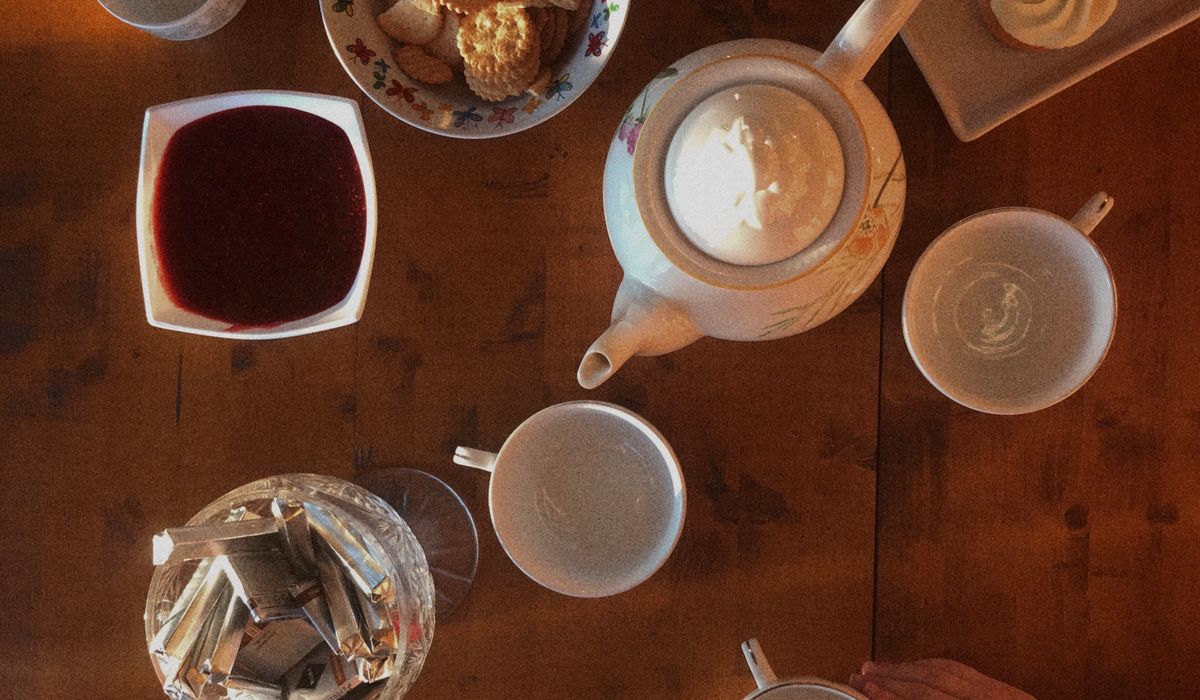
Do not worry about matching china. A collection of odd plates and a few vintage teacups looks far warmer than a uniform set, and it means a broken one is not a tragedy. Add a jug of garden flowers if you have them, and leave a couple of chairs slightly pulled out so people know they are welcome to settle.
The Timings That Buy You an Hour
Work backwards from the moment you want to sit down. If lunch is at two o'clock, the meat goes in at eleven for a shoulder, or at half past twelve for a chicken. The pudding goes in the oven while the meat rests. The potatoes go in beside it, or better still, parboiled and roasted in a separate tin an hour earlier and kept warm.
Build in a buffer of thirty minutes, because someone will be late and something will take longer than the recipe promised. Then use the leftover time to sit down yourself with a drink before the guests arrive. A host who is calm when the doorbell rings sets the tone for the whole afternoon.
Pace the Courses, Don't Chase Them
The commonest mistake is clearing plates the instant the last fork is laid down. Let the table sit for a few minutes. Top up glasses, pass the bread again, let the conversation finish its thought. Only then gather the plates, and do it in one trip with help if it is offered.
Give a proper gap before pudding, twenty minutes at least. If you have a small starter, keep it to something that takes no cooking at all: olives, radishes, good bread, a dish of butter. The roast is the point of the meal, not the overture.
When pudding is done, do not spring up to wash up. Everything can wait. This is the part of the afternoon people remember.
Afterwards: Tea in the Parlour
Traditional British hospitality has always understood the value of the long tail. Once the plates are stacked and the kitchen is at least tidy, move the party into the sitting room. Put the kettle on, bring out a cake on a stand, and let the afternoon slide into something closer to afternoon tea than lunch.
Keep a fruit cake, some shortbread or a plate of small sandwiches on hand for exactly this moment. Serve tea in proper cups with saucers, and offer coffee to those who want it. If someone reaches for a second slice, that is the compliment you were hoping for.
This is vintage parlour living at its best: a comfortable room, a full pot, a biscuit tin doing the rounds, and no particular hurry to be anywhere. Sunday lunch is not a performance. It is an invitation to sit down for a long time, and the host who plans the cooking so that it mostly runs itself is the one who gets to enjoy it.
tag: Hosting Tips

Eleanor Whitcombe Author
Fresh linen, a bedside lamp and a few thoughtful touches turn a spare room into a welcoming retreat that helps visitors feel at ease.
YOU MAY ALSO LIKE

Preparing Your Home for Overnight Guests
Aug 17
10Use hooks, trays and soft lighting to keep clutter under control while making the first room guests see feel warm and organised.
read more
Creating a Calm and Welcoming Hallway
Aug 13
10Bring daffodils, tulips and fresh herbs indoors for a cheerful centrepiece that celebrates the season without expensive arrangements.
read moreAfternoon Tea
-

ERRIC CATONA
Layer russet linens, beeswax candles and foraged foliage to create a generous table that feels cosy as evenings draw in.
May 19, 2016 at 5.12 pm
Reply
ERRIC CATONA
Keep decorations simple with greenery, red ribbons and plain china, then let good food and company take centre stage.
May 19, 2016 at 5.12 pm
Reply -
ERRIC CATONA
Follow a reliable recipe for light sponge, raspberry jam and whipped cream, the cornerstone of any British tea table.
May 19, 2016 at 5.12 pm
Reply
Vintage Decor
Your email address will not be published.